

Overcoming Dance Competition Anxiety: Proven Strategies for Peak Performance
Published on April 2026
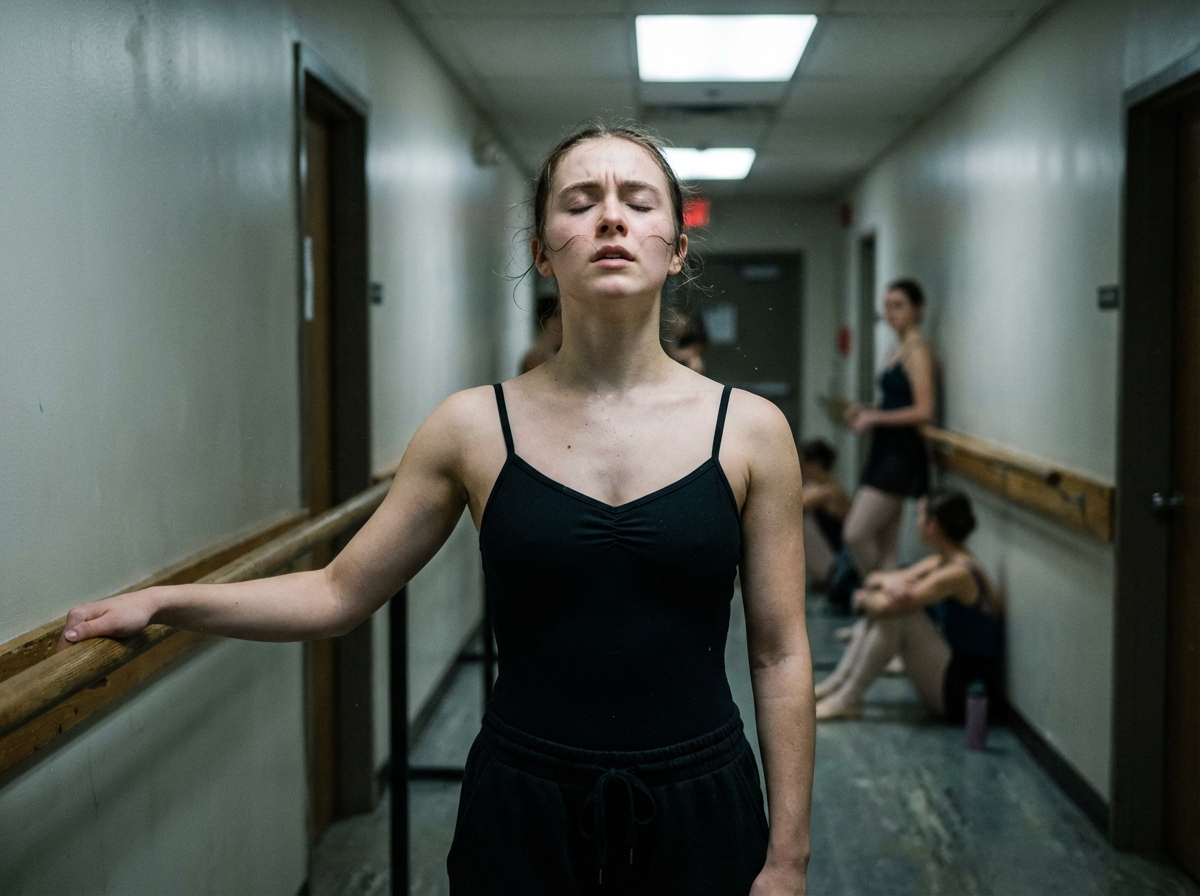
You have prepared for months. You know the routine. In practice, you perform it confidently — cleanly, musically, with genuine presence. Then the moment you take the competition floor, something changes. Your heart rate spikes, your breathing tightens, and the routine you have run a hundred times suddenly feels foreign in your body.
This is dance competition anxiety — and it is far more common than the confident faces at the side of the stage suggest.
What Is Actually Happening in Your Body
Competition anxiety is a normal physiological stress response — your nervous system activating the same mechanisms it uses to prepare the body for any high-stakes event. Heart rate increases to pump more blood to the muscles. Breathing rate increases to deliver more oxygen. Fine motor control — the kind you use for precise technique — temporarily decreases as the body prioritises gross motor strength over precision.
This is not a character flaw. It is biology. And understanding that it is a predictable, manageable physiological process is the first step toward not being derailed by it.
The good news is that a moderate level of this arousal state actually improves performance in physical activities. The problem arises when the arousal level becomes too high — when the physiological response starts interfering with the precise motor control that dance technique requires.
The Difference Between Helpful Nerves and Harmful Nerves
Not all pre-competition nerves are equal. A manageable level of heightened arousal before a performance is associated with sharper attention, stronger physical output, and genuine presence in the space. This is the version of nervousness that experienced performers describe as feeling "ready."
Harmful anxiety is what happens when that arousal level tips over into interference. Intrusive thoughts during the performance, inability to recall sequences you know perfectly well in practice, physical symptoms — shaking hands, audible breathing, visible tension — that affect the quality of your movement.
The goal of managing competition anxiety is not to eliminate the nerves entirely. It is to bring the arousal level down to the zone where it sharpens rather than disrupts your performance.
Practical Strategies That Work
Build a consistent pre-performance routine. A physical and mental warm-up sequence performed identically before every competition and rehearsal creates a reliable physiological anchor. Over time, the body learns to associate the sequence with performance readiness, which reduces the cognitive load of managing an unfamiliar environment on competition day.
Use controlled breathing. Slow, deliberate exhalations activate the parasympathetic nervous system — the physiological counterpart to the stress response — and reduce heart rate. Box breathing (four counts in, four counts hold, four counts out, four counts hold) practised regularly in training creates a reliable tool for downregulating arousal in the moments before you perform.
Reframe what the nerves mean. Research on performance anxiety consistently shows that labelling pre-performance arousal as "excitement" rather than "anxiety" — even internally — improves performance outcomes. The physiological state is identical. The interpretation is the variable. The statement "I am excited" is more accurate and more useful than "I am nervous."
Practise under performance conditions. Anxiety in competition settings is partly a novelty response — your nervous system escalating because the conditions feel unfamiliar. The more often you practise with elevated stakes — filming full run-throughs, performing for an audience of friends, training in unfamiliar spaces — the more familiar the elevated arousal state becomes, and the easier it is to manage.
Prepare specifically for what might go wrong. Anxiety peaks most sharply in response to the unexpected. Deliberately practise recovery — introduce small errors in your run-throughs and continue without breaking. Rehearse your mental response to forgetting a sequence, slipping, or being put off by noise or movement in your peripheral vision. The more prepared you are for imperfection, the less it disrupts you when it happens.
On the Day
Arrive early. Anxiety spikes when you feel rushed or underprepared. Seeing the space, completing a calm warm-up, and observing one or two other competitors before you perform significantly reduces the novelty of the experience.
Stay with your pre-performance routine rather than watching the other competitors intensely. Comparison in the final minutes before you perform increases anxiety and provides information you cannot use.
In the last moment before you take the floor, focus entirely on what you want to feel — connected, present, musical — rather than what you want to avoid. The brain does not process negatives effectively under pressure: "don't forget the arm sequence" directs attention to the arm sequence as a problem rather than as a known part of your routine.
Frequently Asked Questions
Is it normal to forget choreography during a competition even though I know it perfectly in practice? Completely normal. Under high arousal, the brain's retrieval processes are slightly disrupted — particularly for consciously rehearsed sequences. This is one of the strongest arguments for training choreography to the point where it is genuinely automatic rather than recalled. When the sequence is automatic, it is not susceptible to retrieval disruption in the same way.
How do I stop shaking before I perform? Physiological shaking is a symptom of very high arousal. Physical movement — a brisk walk, light jogging in place, jumping — can discharge some of the excess energy driving the shaking response. Controlled breathing helps downregulate the underlying arousal. Anticipating that it may happen and having a strategy for responding to it reduces the secondary anxiety that the shaking itself creates.
Does competition anxiety get better with experience? Typically yes, but not automatically. Experience reduces the novelty component of the anxiety — the unfamiliarity of the environment and the stakes. But without deliberate mental preparation strategies, experienced dancers can remain just as anxious as beginners. The difference is that experienced dancers have more resources — more competitions where they performed despite the nerves — that provide evidence the anxiety is manageable.
Preparing for an upcoming competition? Start your AI-powered competition prep on DanceBetter → Looking for a structured 6-week competition programme? Read about the Gold Medal Bootcamp →