
How to Learn to Dance for Beginners at Home: A Step-by-Step Guide
Published on April 2026
Most people who want to learn to dance never start. Not because they lack the desire — but because the path from "I want to learn" to "I am actually dancing" is unclear, and the traditional options (studio classes, private instructors) feel expensive, intimidating, or logistically complicated.
The good news is that the fundamentals of dancing can be genuinely learned at home. This guide covers exactly how to start, what to focus on first, and the single most important habit that separates dancers who improve quickly from those who stay stuck.
Start with Rhythm, Not Steps
The most common beginner mistake is rushing to learn specific dance steps before developing a basic sense of rhythm. Steps change from style to style. Rhythm is universal — it is the foundation that makes every style learnable.
Before you look up a single tutorial, do this: put on music you genuinely enjoy and move your body to the beat without trying to do anything specific. Let your head nod. Let your shoulders shift. Let your weight transfer from foot to foot. This is not embarrassing — it is the first and most important skill in dancing, and most adults who feel like they "can't dance" are actually fine at this. They just need permission to start moving before they know what they are doing.
Spend five minutes on this every day for a week before you attempt anything else. You are training your nervous system to respond to music instinctively rather than intellectually.
Choose One Style and Stay There
The second most common beginner mistake is trying to learn multiple styles simultaneously. Every style has its own vocabulary, its own physical habits, its own way of relating to music. Switching between them before any of them feels natural resets your progress constantly.
Choose based on what genuinely excites you, not what seems most achievable. If K-pop makes you want to move, start with K-pop. If you want to be able to dance confidently at social events, start with social dance basics. If hip hop is what you love listening to, start with hip hop.
The style that motivates you is the style you will practise consistently, and consistent practice is the only thing that actually produces improvement.
The Beginner's Home Studio Setup
You do not need much. You need:
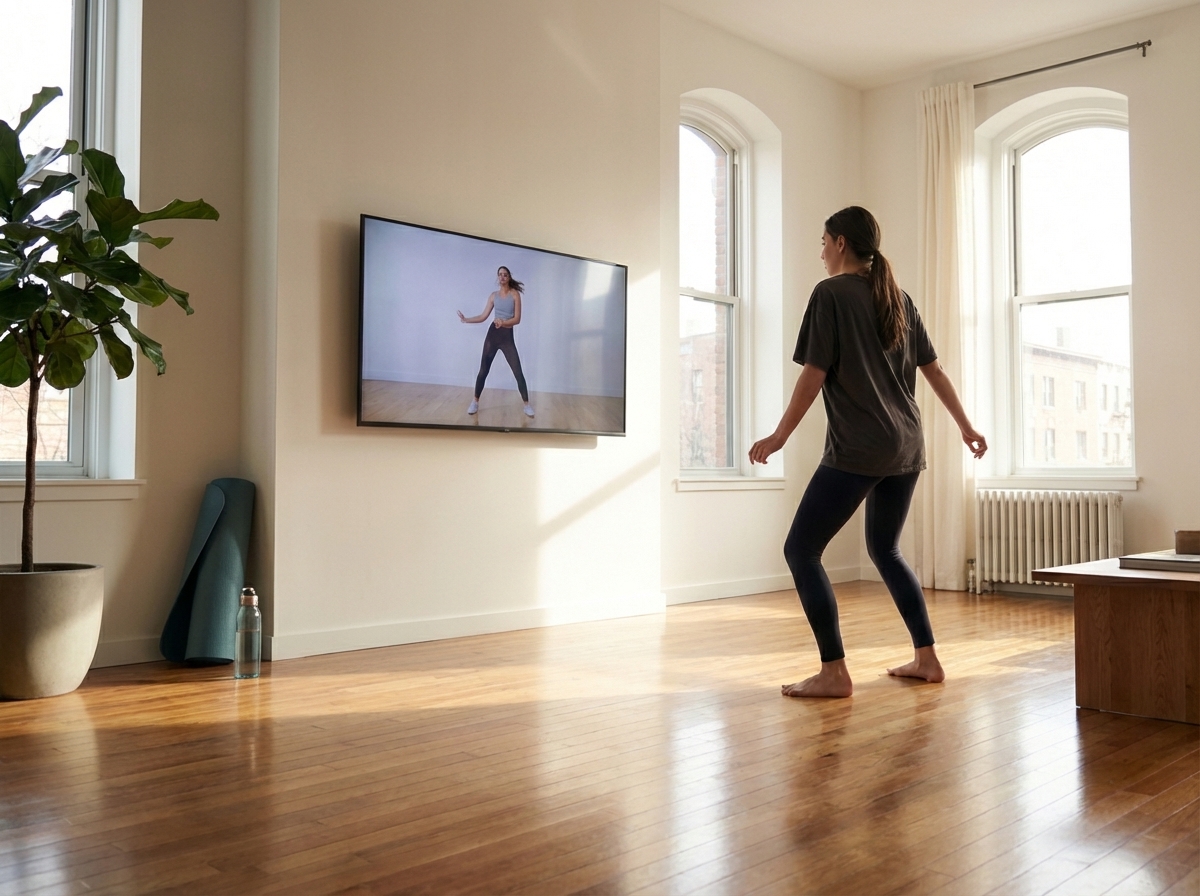
Space. Enough room to extend both arms fully and take two steps in any direction without hitting furniture. A cleared living room works. Push the coffee table to one side.
A way to see yourself. Your phone propped against something stable is enough. A mirror is useful if you have one, but not essential — video is actually more valuable than a mirror because you can watch back specific moments rather than trying to observe and correct yourself simultaneously.
Good lighting. Natural light facing you (not behind you) works well. Dark rooms make it hard to see your own body clearly, which defeats the purpose of recording.
Music you enjoy. This sounds obvious, but it matters more than most beginners realise. Practising to music you genuinely like produces faster improvement than practising to music you are indifferent to, because your body listens more attentively to music that engages you.
How to Structure a Home Practice Session
A 20-minute home practice session that produces real improvement looks like this:
Five minutes — warm up and free movement. Put on music and move however feels natural. This is not choreography — it is getting your body into the habit of responding to music before you add conscious intention.
Ten minutes — focused technique work. Pick one specific thing to work on. Not a full routine — one element. A single turn. The footwork of one eight-count. The arm position in one phrase. Repeat it slowly, then at tempo, then again. Record yourself doing it.
Five minutes — review and apply. Watch the recording back. Identify the one most obvious thing to fix. Do three more repetitions with that correction in mind. Stop.
This structure — short, focused, reviewed — produces faster improvement than longer, unfocused sessions because you are learning intentionally rather than just repeating.
The Habit That Changes Everything
Recording yourself and watching the footage back is the single most impactful habit available to a beginner dancer. It closes the gap between how movement feels from the inside and how it looks from the outside — a gap that is far larger than most beginners expect, and that never fully closes without deliberate external feedback.
Watch your footage immediately after recording. Look for one thing. Fix that one thing. Record again. You do not need a teacher in the room to benefit from this loop — you need honest eyes, and the camera provides them.
Once you have footage you want to get more detailed feedback on, upload it to DanceBetter. The AI analyses your posture, timing, and technique and tells you specifically what to work on next — the kind of precise, external feedback that used to require a teacher standing in the room with you.
Which Style Should You Start With?
If you want to dance at parties, weddings, or social events: Start with social dance basics — a slow-slow-quick-quick pattern that works across many tempos. Simple, immediately useful, and transferable.
If you love hip hop or want to do TikTok dances: Start with hip hop fundamentals — the bounce, the groove, simple eight-counts. Hip hop rewards feeling over precision at the beginner level, which makes it forgiving to learn.
If you have always wanted to try ballroom or Latin: Waltz or cha cha are the most accessible entry points. The waltz has a slow, forgiving tempo. The cha cha has a distinctive footwork pattern that most people find memorable quickly.
If K-pop choreography is what excites you: Start with a simple, short K-pop routine — 16 counts or fewer. The precision required is higher than other styles, but the structured, learnable nature of choreography suits methodical home practice very well.
Frequently Asked Questions
Can adults learn to dance for the first time? Absolutely. There is no age limit on learning to dance, and adult beginners who practise consistently often progress faster than children because they are more able to learn deliberately and apply corrections intentionally.
How long does it take to learn to dance as a beginner? Four to six weeks of regular, focused home practice is enough for most beginners to feel genuinely comfortable moving to music in their chosen style. Being performance-ready or competition-ready takes longer, but feeling like a dancer rather than someone mimicking movements is achievable relatively quickly.
Do I need to take classes, or can I learn to dance entirely at home? You can develop substantial technique entirely through home practice — particularly with video feedback tools that provide the external perspective you cannot get from a mirror alone. In-person classes add community and the physical correction of a teacher adjusting your body, which has value. But for most recreational dancers, home practice supported by video feedback produces meaningful results without classes.
What is the most common reason beginners give up? Comparing themselves to experienced dancers and concluding they are not progressing. The gap between a beginner and an experienced dancer looks enormous because experienced dancers have internalised thousands of hours of physical habit. The correct comparison is week-one you versus week-four you — and that comparison almost always shows meaningful progress.
Ready to find out exactly what to improve first? Upload a short practice video to DanceBetter → Want to know which dance style suits you? Browse our style guides →