

How to Dance with Confidence: Building Your Presence and Expression
Published on April 2026
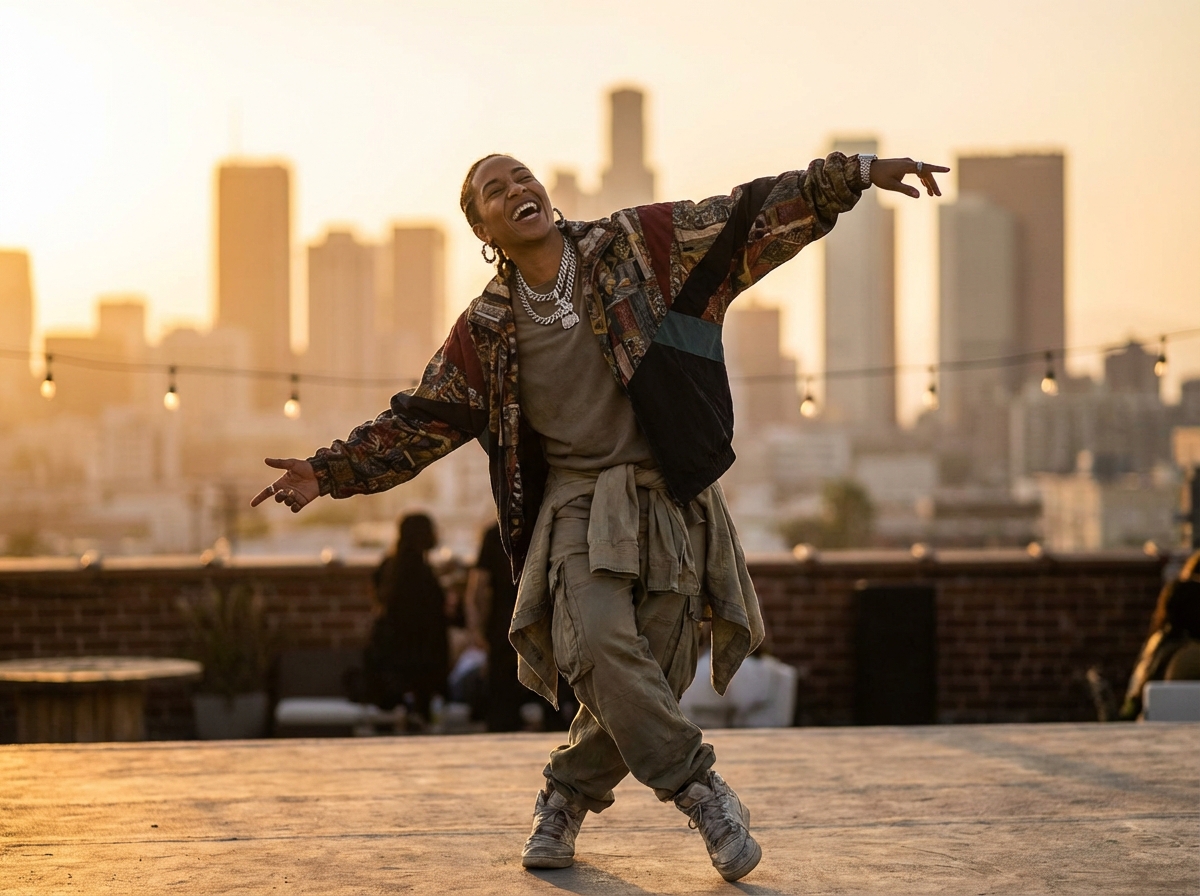
Confidence in dancing is misunderstood. Most people treat it as something you acquire once you are good enough — a prize awarded at some undefined threshold of skill. This framing is both wrong and counterproductive, because it makes confidence a consequence of ability rather than a component of it.
The truth is that confidence in dancing is itself a skill. It has specific physical and mental components. It can be trained deliberately. And it produces better dancing at every level of ability.
The Confidence Paradox in Dance
Here is the paradox: the physical qualities that read as confidence — committed weight transfer, direct eye focus, expansive use of space, unhurried timing — are also the technical qualities that make dancing look better. Confidence and competence in dance are not sequential (first get good, then feel confident). They are simultaneous and mutually reinforcing.
A dancer who moves with commitment and physical presence, even while executing simple movements, looks better than a technically stronger dancer who is visibly uncertain. This is not opinion — it is what audiences and judges consistently respond to, and it is why performance quality appears as a separate scoring category in most competition rubrics.
What Confident Dancing Looks and Feels Like Physically
Before addressing mindset, it helps to understand what confidence actually looks like in the body. The physical signatures of confident dancing are:
Full weight commitment. Confident dancers step with their whole weight. Uncertain dancers hedge — they keep a portion of their weight in reserve, which produces small, cautious movements.
Sustained eye focus. Confident dancers look at something specific — the audience, a focal point in the space, their partner. Uncertain dancers look at the floor.
Use of the full available space. Confident dancers travel. They extend their arms fully. They take up the space they are in. Uncertain dancers contract, stay small, and unconsciously protect themselves from being fully seen.
Unhurried timing. Confident dancers tend to be slightly late on accents rather than slightly early. Rushing is almost always a sign of anxiety — the body trying to get the uncomfortable moment over with. Sitting back on the beat, even slightly, reads as control and ease.
The One Practice That Changes Confidence Fastest
The single most effective thing you can do to build dance confidence is to perform more — but in low-stakes environments before you encounter high-stakes ones.
Most dancers practise privately and then perform publicly, with nothing in between. The jump from private practice to public performance is too large for confidence to survive, because the brain responds to novelty by escalating its arousal response. Introducing intermediate steps — dancing in front of a friend, recording yourself and watching it back, joining an open class — gradually expands the range of conditions in which dancing feels normal.
Recording yourself and watching the footage back is particularly valuable here, because it forces you to encounter yourself as an audience would. Most people who feel deeply unconfident about their dancing have never watched themselves dance from the outside. The footage is almost always better than the internal experience — and that discovery, experienced repeatedly, recalibrates your self-assessment.
Once you have footage, uploading it to DanceBetter gives you specific, objective feedback on what is actually happening in your movement — which means you can replace vague anxiety ("I don't know if this looks good") with specific information ("my timing is accurate but my eye focus drops on the second eight-count"). Specific problems are manageable. Vague uncertainty is not.
The Mindset Shifts That Actually Help
Stop aiming for "not making mistakes" and start aiming for "committing fully." These produce opposite physical results. Aiming to avoid mistakes produces tentative, hedged movement. Committing fully produces the physical confidence that makes dancing look good even when mistakes happen — because a confident mistake looks like a choice, not an accident.
Separate your dancing from your worth as a person. Dancing badly in a given session is not evidence that you are a bad dancer or an uncoordinated person. It is data about what needs work in the next session. The dancers who improve fastest are those who can be genuinely curious about their own weaknesses rather than ashamed of them.
Compare yourself to your past self, not to other dancers. Comparison to more experienced dancers is structurally unfair — they have thousands of hours of physical habit that you do not yet have. The only meaningful comparison is week-one you versus week-four you. That comparison almost always shows genuine improvement that the internal experience of dancing never reveals.
Frequently Asked Questions
Is it normal to feel confident in practice but lose it when performing? Completely normal, and almost universal. The brain elevates its stress response in novel, high-stakes environments — which is what performance represents compared to private practice. The solution is not to try harder to feel confident in performance, but to make performance feel less novel through regular, deliberate low-stakes performing.
Does getting better at dancing automatically make you more confident? Sometimes, but not reliably. Many technically accomplished dancers remain significantly unconfident because they have never addressed the mindset and performance components. Confidence needs to be trained deliberately alongside technique, not expected to arrive automatically once a skill threshold is reached.
What should I think about when I'm dancing to feel more confident? Focus on what you want to feel — connected, musical, present — rather than on what you want to avoid. The brain under stress does not process negatives well. "Don't forget the arm sequence" directs attention to the arm sequence as a problem. "Feel the music in your chest" directs attention to a positive sensation that naturally produces better movement.
Ready to find out specifically what is holding back your confidence on camera? Upload a practice video to DanceBetter →