

How to Help Your Child Prepare for a Dance Competition: A Parent's Guide
Published on April 2026
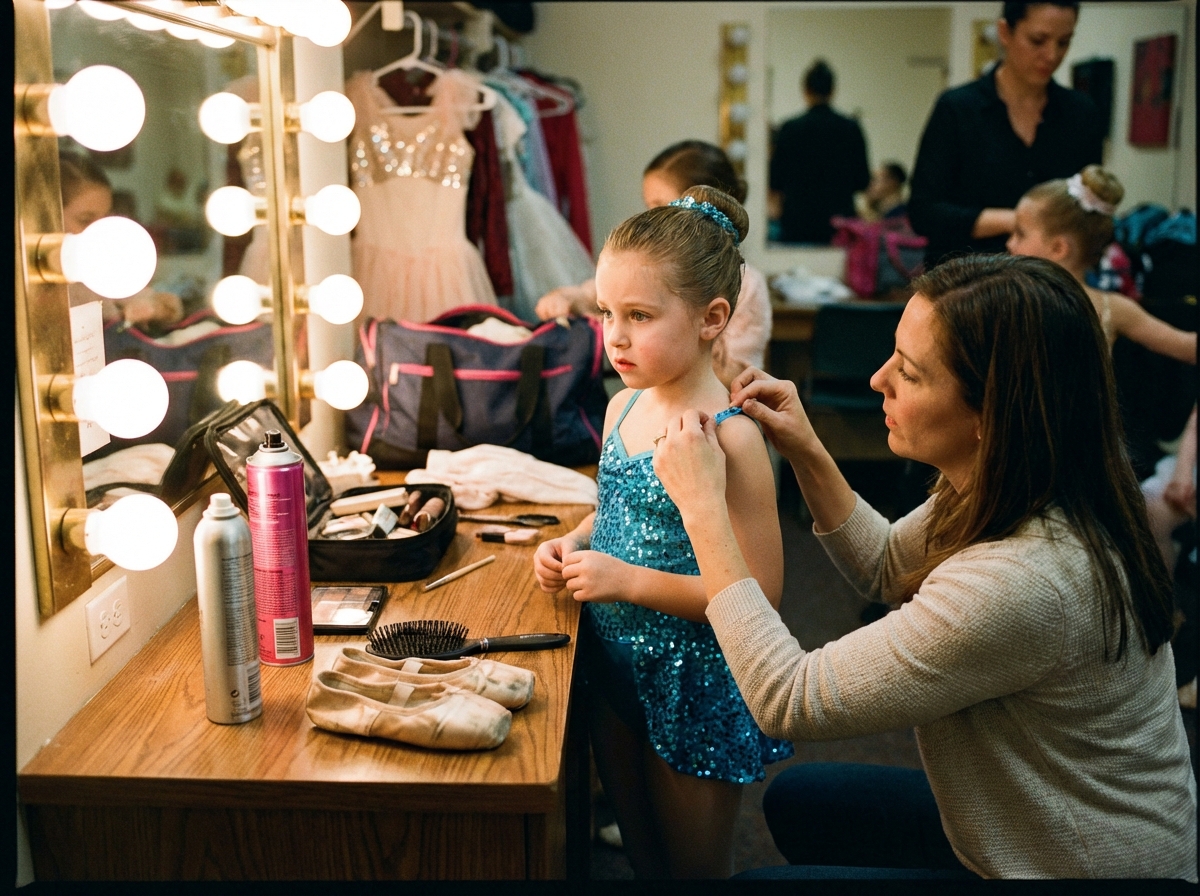
Your child has an upcoming dance competition. You want to help. The challenge is that you are probably not a dancer yourself — and even if you are, your child's teacher has their own approach, and navigating the space between studio training, home practice, and your own support without crossing lines that create friction takes some thought.
This guide is written specifically for parents who want to be genuinely useful in the weeks before a competition without inadvertently making things harder.
What Your Role Actually Is (And Is Not)
The most important thing to understand is the distinction between support and coaching. Your child's dance teacher is the coach. Your role is to create the conditions in which your child can practise effectively, manage the logistical complexity of competition preparation, and provide the kind of steady, unconditional support that helps rather than pressures.
What this means in practice:
Do: Create regular, distraction-free time and space for home practice. Help with logistics — competition registration, travel, costume, hair. Provide food, sleep, and rest. Offer genuine, specific encouragement that focuses on effort rather than outcome.
Be thoughtful about: Offering technical corrections unless you have a dance background and your child's teacher has explicitly invited your input. Expressing anxiety about the competition outcome in front of your child — your emotional state is contagious. Comparing your child's preparation or ability to other competitors.
Setting Up Effective Home Practice
Home practice between studio sessions is one of the highest-leverage things your child can do in competition preparation — but unstructured home practice can actually reinforce mistakes rather than fix them. A few simple principles make the difference:
Short, focused sessions beat long, unfocused ones. Fifteen to twenty minutes of deliberate practice on specific elements is more valuable than an hour of full run-throughs. Ask your child's teacher which specific sections or technical elements need the most work between lessons, and structure home practice around those.
Recording is essential. Your child cannot see themselves from the outside during practice. Recording — even on a phone propped against a water bottle — creates the external view that lets them see what their teacher and eventually the judges will see. Watch back together if your child is comfortable with that, but let them drive the analysis rather than directing it yourself.
Use the footage for objective feedback. Once you have a practice recording, uploading it to DanceBetter gives your child specific, criteria-based feedback on what is actually happening in their movement — not what it feels like from the inside. The AI identifies the specific technical elements costing the most in scoring terms, and generates a practice schedule prioritised around those elements. For parents who cannot assess technical dance quality themselves, this is the most valuable tool available.
The Emotional Side of Competition Preparation
Competition preparation is emotionally demanding for young dancers in ways that are easy for adults to underestimate. The combination of wanting to do well, fear of making mistakes in public, awareness of being judged and compared to peers, and the physical demands of intense training creates a genuine stress load.
The most protective factor for young dancers navigating this is an unconditional base at home — a parent whose support does not depend on placement. This sounds straightforward, but in practice it requires conscious attention. The question "how did the competition go?" is natural, but it can feel loaded when a child already has their own internal judgment running. "How did it feel to be on stage?" is a better first question — it prioritises their experience over their result.
Competition disappointment is also a normal part of the process, and how parents respond to it shapes how their child metabolises it. A competition result that does not meet expectations is not a verdict on a child's worth or potential — it is data about what to work on next. Treating it as such, calmly and practically, models a relationship with performance that will serve your child far beyond this specific competition.
Managing the Logistics So Your Child Can Focus on Dancing
One of the genuinely underrated parental contributions to competition preparation is simply handling the administrative complexity so your child's mental energy stays available for the actual dancing. In the weeks before a competition, this typically includes:
- Confirming registration, division, and performance time
- Coordinating costume, accessories, make-up, and hair requirements
- Arranging travel and arrival time with enough buffer to complete a full warm-up before performance
- Packing a competition day bag that covers contingencies — spare tights, safety pins, hair supplies, food, water, a copy of the music if your child is self-submitting
Arriving at a competition relaxed and prepared — having eaten, having completed a warm-up, and feeling organised — is itself a meaningful performance advantage.
Frequently Asked Questions
How much should I push my child to practise at home before a competition? Follow your child's teacher's guidance on home practice volume. Over-practising close to a competition — particularly in the final few days — leads to fatigue that shows in the performance. If your child is resisting home practice, explore whether it is physical tiredness, emotional pressure, or a specific frustration with an element of the routine that is making practice feel aversive.
Should I watch my child's competition from the audience or backstage? This depends on the competition's rules and your child's preference. Many young dancers perform better when they know a parent is in the audience rather than backstage — the backstage environment can increase anxiety through close proximity to the competitive atmosphere. Ask your child what they prefer and respect that preference.
How do I respond if my child does not place as hoped? Acknowledge their disappointment genuinely — do not minimise it with "you were amazing" if they do not feel that way. Then, when the emotional intensity has passed, approach the result as information: what the judges' feedback says, what it suggests about what to focus on in training, and what was genuinely strong about the performance. The placement is one data point. The conversation about what to do with it is what matters.
Is AI dance coaching appropriate for a child preparing for competition? Yes, particularly as a home practice support tool. DanceBetter's AI analysis gives young dancers specific, objective, criteria-based feedback on their practice footage — the kind of detailed technical correction that typically requires a private session with a competition-level coach. For families where competition coaching is financially out of reach, or where weekly private lessons are simply not available, AI feedback closes a meaningful gap.
Ready to set up AI-powered home practice for your child's competition prep? Upload their practice video to DanceBetter → Looking for a structured 6-week competition programme? See the Gold Medal Bootcamp →