

Mastering TikTok Dances: Tips for Learning Viral Choreography Quickly
Published on March 4, 2026
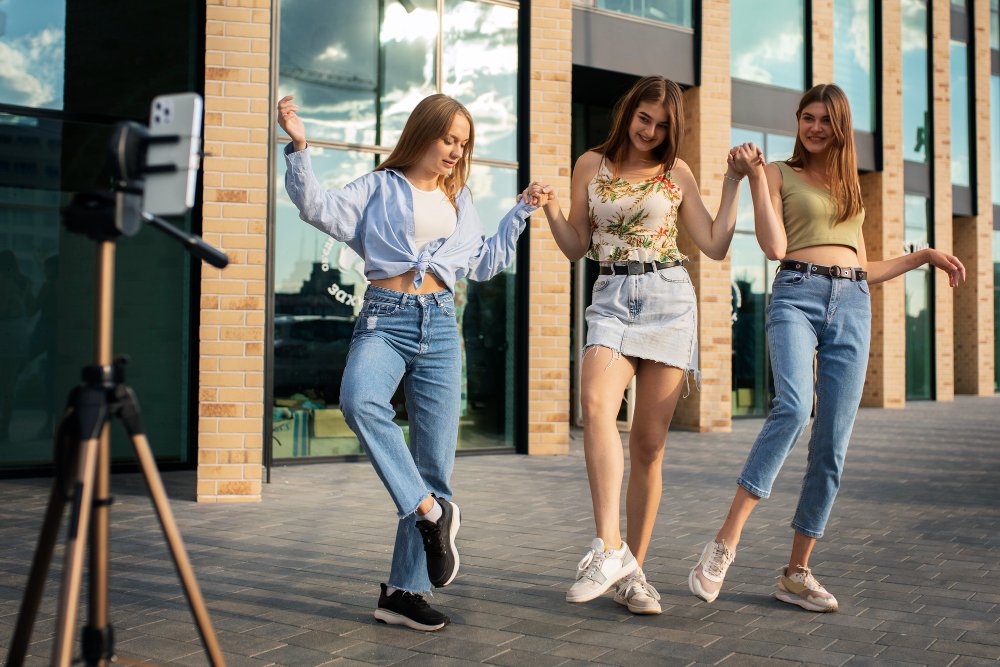
Scrolling through your feed and seeing a brand new audio trend can be highly motivating. You watch someone effortlessly glide across the floor and immediately think you can pull off those exact same moves. Then you actually prop your phone against a water bottle on your bedroom floor and try to replicate the routine.
After recording thirty different takes and completely losing the beat, the reality of the situation sets in. Learning popular TikTok dances is significantly harder than it looks on a glowing five-inch screen. But here is the thing — it is not your coordination that is the problem. It is your method.
Why TikTok Dance Challenges Are So Hard to Learn at Home
Most people try to learn new choreography by simply playing the original video on a continuous loop. You stare intently at a professional TikToker dancing and try to mentally flip their left arm to match your right arm. This mental gymnastics usually results in you stepping backward when you should be sliding forward.
You end up wasting hours just trying to decode the core footwork of a simple fifteen-second TikTok dance. By the time you actually figure out the rhythm, the audio trend might already be losing its viral momentum.
There is also the problem of not being able to see yourself. You might memorise the exact sequence of steps but still look incredibly stiff and unnatural on camera. It is practically impossible to accurately diagnose your own posture while you are in the middle of a spin or a sharp hip drop. Your brain is busy counting beats. It cannot simultaneously audit your shoulder angles.
The Biggest Mistakes People Make When Learning TikTok Choreography
Before getting to the solution, it helps to know exactly where most people go wrong. These are the three patterns that consistently slow dancers down:
Trying to learn the whole routine at once. Viral TikTok dances are typically short — fifteen to thirty seconds — but that does not mean they are simple. Attempting to nail the entire routine from the first bar to the last in one sitting builds sloppy habits into muscle memory. Break it into four or five distinct phrases and lock in each one before connecting them.
Watching at full speed only. The original creator has already internalised the routine. They are not thinking about it — they are performing it. Watching at full speed only shows you the finished product, not the mechanics underneath. Most platforms let you slow video playback to 0.5x or 0.25x. Use that feature aggressively, especially on fast footwork sections.
Ignoring the off-beat moments. The sharp, satisfying hits in a TikTok dance challenge almost always land on a specific beat or lyric. The movements in between those hits — the transitions and weight shifts — are what make the difference between looking polished and looking like you are rushing to catch up. Those quiet moments deserve as much attention as the flashy ones.
How to Actually Learn a TikTok Dance Fast
Here is a method that works whether you are picking up a beginner-friendly shuffle trend or a technically demanding K-pop choreography challenge.
Step 1 — Isolate the audio anchor. Before you even try to move, listen to the song three or four times without watching the video. Identify the two or three moments where something musically distinct happens — a bass drop, a lyric change, a clap. Those are almost always the moments the choreography is built around.
Step 2 — Learn the footwork first, arms second. Your legs carry your weight and set your timing. Your arms are decoration. Nail where your feet are going before you worry about what your hands are doing. This is how professional choreographers teach it, and it applies just as well to a thirty-second viral TikTok dance as it does to a full stage routine.
Step 3 — Record every attempt, not just the good ones. This is where most home learners leave value on the table. Recording yourself is not just for posting — it is your feedback loop. Watch your attempts back immediately and look for the one thing that is most obviously off. Fix only that thing in the next take. Do not try to correct everything at once.
Step 4 — Use AI to close the gap. This is exactly where a tool like DanceBetter completely changes the game. Load the original creator's video as your reference on one side and your own recording on the other. The AI maps both bodies simultaneously and highlights exactly where your timing or joint angles drift apart — whether it is a slight shoulder slouch, a late weight transfer, or footwork that is half a beat behind. You see it instantly, in precise digital overlays, rather than squinting at your own reflection.
The Split-Screen Secret That Replaces Hours of Guesswork
The split-screen comparison method is the single biggest efficiency unlock for learning TikTok dance challenges. Instead of rewinding the original video and then rewinding your own video and trying to hold both in your head at once, you see them side by side in real time.
The algorithm highlights the exact frame where your body diverges from the reference. Whether you are learning a hip hop challenge, a K-pop routine, or one of the fast-footwork trends that flood your feed every few weeks, the correction is specific and immediate. No more guessing whether your arm wave was smooth enough. No more wondering if you hit the bass drop on time.
You can go from take one to a postable version in an afternoon rather than a weekend.
Ready to Post — Without the 47 Takes
Mastering a TikTok dance challenge does not have to be a frustrating weekend chore. With the right breakdown method and honest, frame-by-frame feedback, it becomes a genuinely fun afternoon project.
Stop looping the original video and hoping something clicks. Record yourself, compare the footage, get specific about what is off, and fix the one thing that matters most in the next take. That loop — record, compare, fix, repeat — is how every skilled dancer actually improves, whether they are learning viral TikTok dances in their bedroom or rehearsing choreography for a stage.
Upload your video to DanceBetter and find out exactly what to fix before you hit post.
Frequently Asked Questions
How do I learn a TikTok dance by myself? Break the routine into short phrases of three to five seconds each. Learn the footwork for each phrase before adding arm movements. Record every attempt and watch it back immediately to identify the single most obvious issue. Repeat until each phrase feels automatic, then connect them.
Why does my TikTok dance look different on camera than it feels? Because your internal sense of movement — proprioception — is not calibrated to how you actually look from the outside. What feels like a big, sharp movement often reads as small and soft on camera. Recording yourself and watching the footage is the only reliable way to close that gap.
How long does it take to learn a TikTok dance challenge? A simple fifteen-second routine with repetitive steps can be learned in one to two hours of focused practice. A complex thirty-second K-pop choreography challenge with intricate footwork may take several sessions spread over a few days. Using frame-by-frame AI comparison feedback can cut that timeline significantly by eliminating guesswork.
What is the easiest TikTok dance to learn for beginners? Look for trends built around a single repeated movement — a step-touch, a body roll, or a simple arm sequence that mirrors the rhythm of the song. Avoid routines where every bar introduces a completely new move until you have built some basic coordination. Filter by "beginner dance tutorial" on the platform to find breakdowns aimed at new learners.
Does recording yourself actually help you improve faster? Yes, consistently. Research on motor learning shows that external feedback — seeing yourself on video — accelerates skill acquisition significantly faster than relying on how a movement feels. Combining self-recording with AI-powered comparison against a reference dancer gives you the most specific and actionable version of that feedback.
Want feedback on your specific TikTok routine? Upload your video here and get your AI analysis in seconds.