

The Ultimate Wedding Dance Guide: Preparing for Your First Dance
Published on February 24, 2026
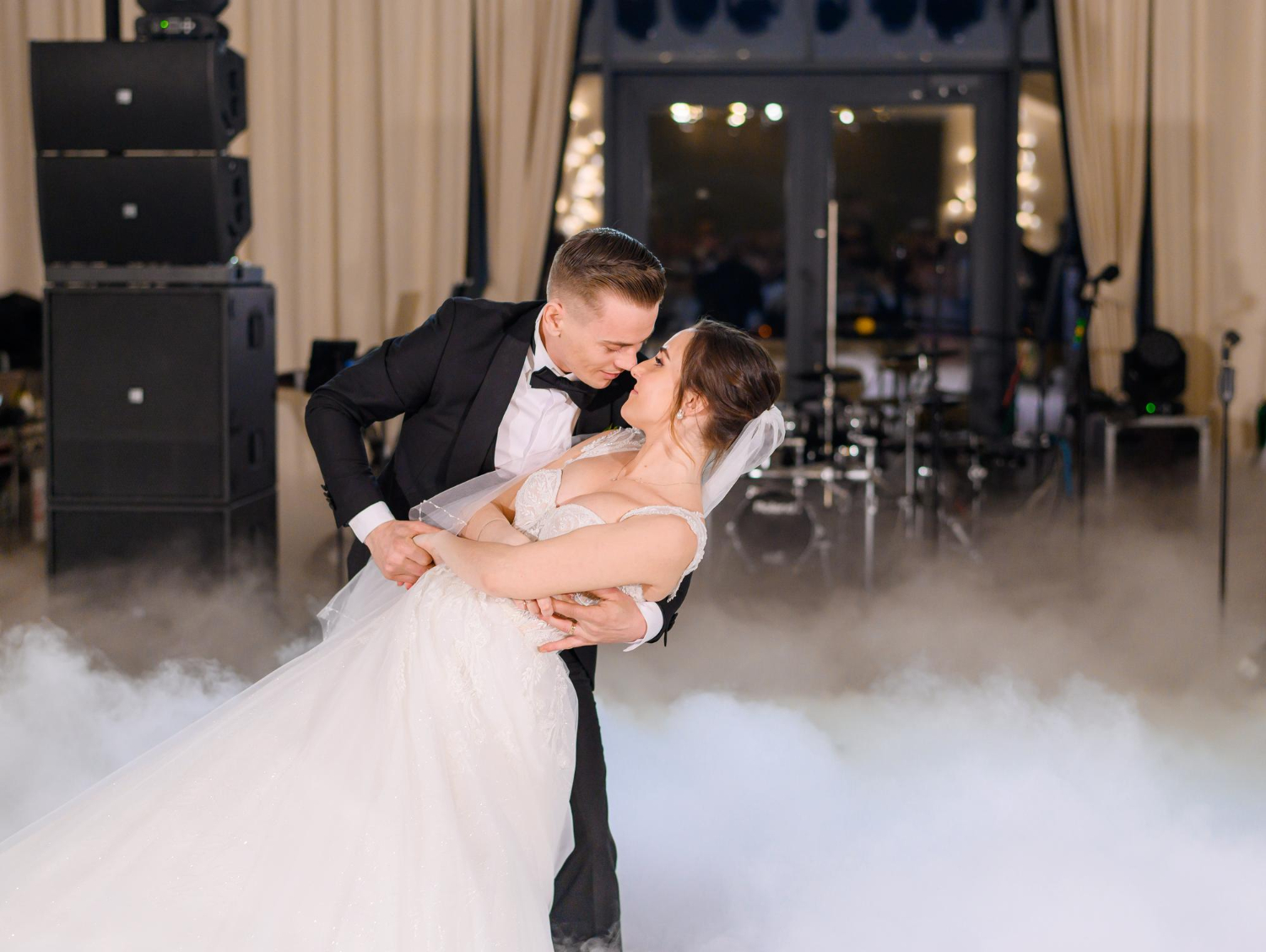
Let's be real. The first dance is in a few days. Maybe you meant to take formal wedding dance lessons, but life — and seating charts — got in the way. You practised in the living room once, forgot the steps, and now you are terrified of stepping on the dress or looking stiff in the photos.
Do not panic. You do not need a choreographer right now. You do not need a dance studio, a six-week beginners course, or a perfectly memorised wedding dance choreography routine. What you need is to look clean, connected, and comfortable — and that is genuinely achievable this weekend.
When you are down to the wire, trying to cram in a complex routine is a trap. It leads to that dreaded "counting face" where you both look like you are doing long division instead of enjoying your first dance together. If you missed out on months of couples dance lessons, the answer is not to panic-learn more steps. It is to strip back to the absolute essentials and make those look effortless.
Here is your emergency survival guide to looking smooth, confident, and genuinely happy on the dance floor — even if you have never taken a single wedding dance lesson in your life.
Step 1 — Forget the Choreography, Master the Weight Transfer
If you have forgotten whatever wedding dance choreography you tried to put together, stop forcing it. Muscle memory is not built in 48 hours, and trying to recall steps under pressure while an entire room watches you is a recipe for a frozen smile and a panicked shuffle.
Instead, focus on the fundamental physics of couple dancing: the weight transfer.
The fix: Hold each other close. Actually shift your weight completely from one foot to the other. Do not do the awkward middle-school sway where both of you are just rocking from side to side without really going anywhere.
The strategy: Move to the slow beat. If your song is fast, step on every other beat — what dancers call half-time. Moving slower dramatically reduces your margin for error and makes everything look more controlled and elegant. Nobody watching can tell you are doing half the steps. They just see two people moving together with intention.
Step 2 — Build a Wedding Dance Frame That Photographs Well
You can perform the simplest easy wedding dance steps in the world, but if you are hunched over staring at your feet, you will look nervous in every photo. Conversely, good posture and a solid physical frame can make you look like dancers even when you are essentially just swaying.
The fix: Stand tall. Imagine a string gently pulling the crown of your head toward the ceiling. Let your shoulders drop and settle — do not clench them up around your ears.
The mechanics for the lead: Place your hand firmly on your partner's shoulder blade, not their waist. This creates a dependable frame that guides without gripping.
The mechanics for the follow: Rest your hand lightly on the bicep or shoulder. Your arm should have gentle tone — not limp, not rigid.
The photographer's hack: If you collapse your elbows inward against your ribs, you look small and closed on camera. Lift your elbows slightly outward to create a small "window" of space between your bodies. This one adjustment immediately upgrades your silhouette in photos and makes you look like you know exactly what you are doing.
Step 3 — The Safe Dip (Your Applause-Getter)
A dip is the ultimate shortcut for a last-minute wedding dance. It signals to your guests that you planned this, that you know what you are doing, and that this is a real performance — not just two people swaying. But it has to be safe and comfortable, or it reads as terrifying rather than romantic.
The fix: The person leading the dip must not bend their lower back. Instead, step into a wide lunge and bend your knees. This keeps your centre of gravity low and stable.
The physics: Keep your bodies close together throughout. If there is a large gap between your hips, the dip will feel extremely heavy for the person being dipped and will look unsteady from the audience. Stay close, and it feels light and easy for both of you. Hold the dip for three seconds — long enough for the photographer to get the shot — then come back up smoothly.
Practice this five times before the wedding. That is all you need.
Step 4 — Eye Contact Is the Secret Weapon
Here is the biggest open secret in beginner wedding dance preparation: your guests are watching your faces, not your feet.
If you are both looking down at the floor counting steps, your guests will assume something has gone wrong. If you are looking into each other's eyes, they will think it is the most romantic thing they have ever seen — regardless of what your feet are doing.
The fix: Choose one of you to be the designated "audience ignorer." Both of you look at each other. If someone steps on a toe, laugh it off together and keep going. A mistake shared with a genuine smile looks like a sweet candid moment. A mistake met with a panicked grimace looks like a mistake.
Eye contact is not just emotionally resonant — it is your best disguise.
Step 5 — The Underarm Turn (Your One Dynamic Move)
You need exactly one move that breaks up the swaying and makes the routine look planned. The underarm turn is the perfect choice: simple to learn, always well-received, and impossible to get wrong as long as you follow one rule.
The steps:
- The lead gently raises their left hand, palm down, creating an arch.
- The follow walks forward in a small, controlled circle underneath that raised arm.
- The lead lowers their hand as the follow completes the turn and steps back into the frame.
- Resume swaying as if nothing happened.
The one rule: The raised hand is an invitation, not a crank. The lead should not rotate their partner's arm like a joystick. The follow controls their own spin. The hand above is just a guide rail.
Practice this three to four times until the follow can complete the turn without looking down. Then add it once in the middle of the song and once near the end, and you have a structured routine.
How to Choose the Right Song for an Easy First Dance
The song you choose has a massive impact on how hard or easy your wedding dance will be to pull off. If you have not locked in your first dance song yet, or if you are reconsidering it, here is what to look for:
Tempo: Aim for 70 to 100 beats per minute. Anything faster becomes physically demanding. Anything slower can feel awkward because the gaps between beats are so long you need to fill them with actual movement.
Structure: Songs with a consistent, predictable rhythm are much easier to move to than songs with sudden tempo changes, key changes, or long instrumental bridges. Listen for a steady pulse you can step to before you commit.
Length: The ideal wedding first dance song is two to three minutes. Anything longer starts to feel like a marathon when you are standing in the centre of the room with everyone watching.
Easy first dance song styles to consider: Slow waltzes, mid-tempo pop ballads, and classic soul songs all tend to have consistent rhythms that work well for beginners. Avoid songs with long spoken-word intros or dramatic crescendos that make the timing unpredictable.
The 15-Minute Weekend Drill to Learn Your Wedding Dance at Home
You do not need hours of drilling. You need focused, deliberate repetition of the right things. Here is a complete wedding dance practice session that fits inside fifteen minutes:
- Put your song on and stand together in your kitchen or living room.
- For the first play-through, focus only on weight transfer and frame. Ignore everything else.
- For the second play-through, add one underarm turn in the middle of the song.
- For the third play-through, add your dip in the final ten seconds.
- Prop your phone up and record a complete run-through.
Watch the video back together. Look for the single most obvious thing to improve — usually it is the frame collapsing, or the timing of the turn. Fix that one thing. Do one more run-through. Stop.
If you want an objective second opinion on your posture, timing, or frame without booking a last-minute wedding dance lesson, upload that clip to DanceBetter. The AI will identify exactly what is off and give you one clear thing to fix before the big day.
Want to Keep Dancing After the Wedding?
If this weekend has convinced you that dancing together is actually fun, you do not need a studio to keep going. Plenty of couples learn salsa, ballroom, and social dance styles entirely at home with video feedback — no class schedules, no contracts, and no audience while you are still figuring things out. Read our guide on learning to dance as a couple at home →
Frequently Asked Questions About Wedding Dance Preparation
Can I learn a wedding dance without taking lessons? Yes. For a simple, elegant first dance — basic sway, one turn, one dip — you do not need a professional instructor. What you do need is deliberate practice, honest video feedback on your posture and timing, and the confidence to keep it simple rather than overreach.
How many hours of practice do I need for a wedding dance? For a basic routine using the techniques in this guide, two to three focused hours of practice across a few sessions is enough for most couples. The key is quality of practice, not duration — recording yourselves and watching the footage back is worth more than an extra hour of undirected repetition.
What is the easiest dance style to learn for a wedding first dance? A slow waltz or a simple rocking two-step are the most forgiving for beginners. Both are built on a slow, predictable beat and require minimal footwork. If your song has a faster tempo, half-timing it — stepping on every other beat rather than every beat — makes almost any style manageable.
How do I stop looking stiff during my first dance? Stiffness almost always comes from holding your breath and looking at your feet. Take a breath before the music starts. Look at your partner, not the floor. And remember: movement at any level looks better than frozen stillness. Even a gentle, relaxed sway reads as intentional if your posture is good and you are genuinely looking at each other.
What if we mess up during the first dance? Laugh. Genuinely. A couple who stumbles and laughs it off together looks warm, real, and deeply connected. A couple who stumbles and looks mortified looks like they are having a bad time. Your guests are rooting for you. They will love you for being human far more than they will judge you for a missed step.
Is it worth getting AI feedback on our wedding dance practice video? Absolutely — especially if you do not have access to a mirror or a knowledgeable friend who can give honest feedback. Recording yourselves is the most important thing you can do. Getting specific, frame-by-frame feedback on what is actually going wrong — rather than just a general sense that something feels off — cuts your correction time dramatically.
You have absolutely got this. Keep it simple, keep your frame up, and just focus on each other. Have an amazing wedding.
Ready for a second opinion on your practice video? Upload it to DanceBetter here →