

What Judges Look for in a Dance Competition: Insider Secrets
Published on April 2026
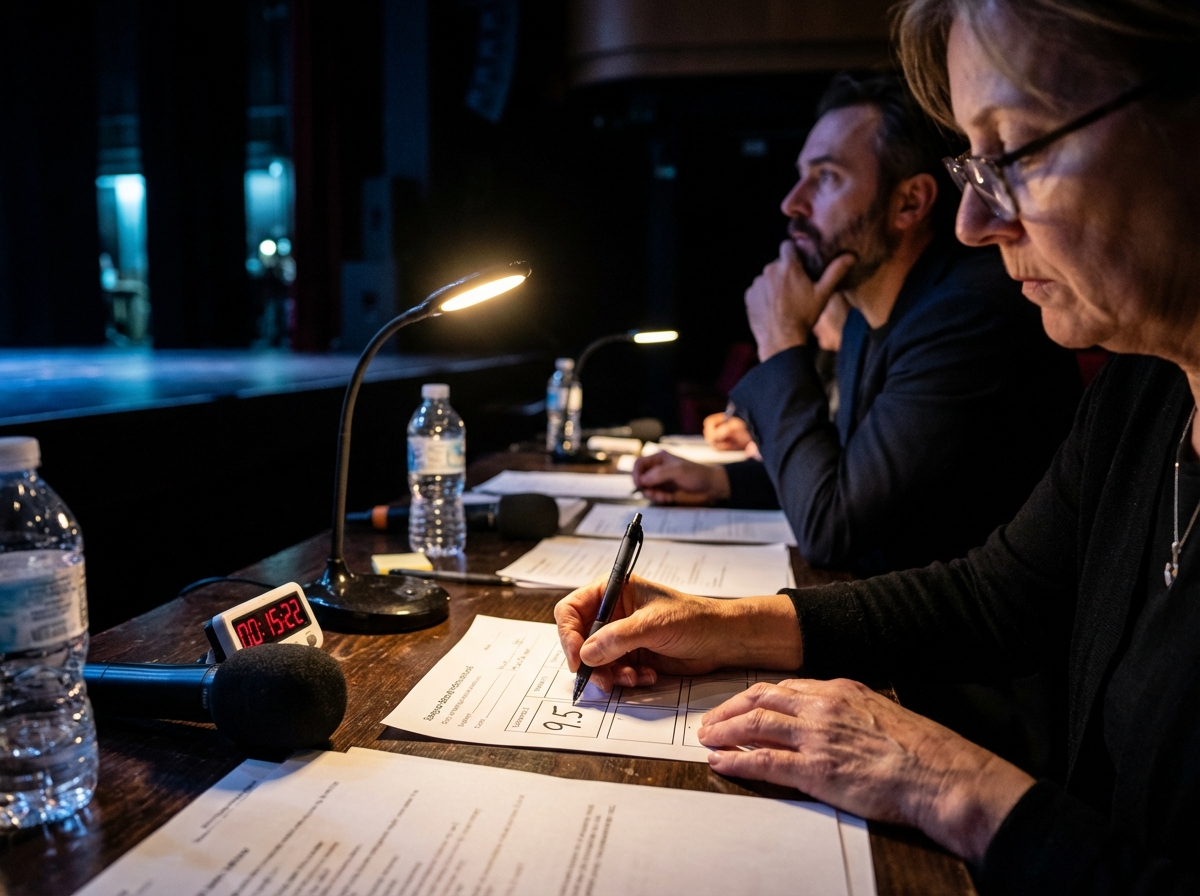
Most dancers prepare for competitions by practising their routine. Most judges score competitions against a criteria framework. Those two things are not always the same — and the gap between them is where placements are won and lost.
Understanding what judges are actually looking for, in plain language, is one of the highest-value things you can do before any competition. This guide breaks down the major scoring categories that appear across most dance competition judging systems, what each one means in practical terms, and how to specifically train for it.
Technique
Technique is the most universal judging category and the one that most dancers already prioritise — so we will keep this brief. Judges are looking at the precision, control, and range of your physical execution. In ballet and ballroom this includes turnout, alignment, and footwork. In hip hop and street styles it includes timing, isolation quality, and musicality. In contemporary it includes spinal use, weight and momentum, and spatial range.
The important thing to know about technique as a scoring category is that judges are not looking for perfection — they are looking for control and intentionality. A technically ambitious move that is executed with clear awareness of what the body should be doing scores higher than a technically simpler move performed with vague or accidental placement.
How to train for it: Identify the specific technical elements that are most weighted in your style's judging criteria. Use frame-by-frame video analysis to identify where your technique breaks down in practice, then target those specific elements with focused repetition before adding performance energy.
Musicality
Musicality is one of the most poorly understood scoring categories — and one of the easiest to improve with deliberate attention. Judges are assessing how deeply connected your movement is to the music: whether your phrasing, accents, pauses, and texture choices reflect genuine listening rather than counting.
The clearest indicator judges use is whether a dancer's performance would make sense without the music. If the answer is yes — if the movement quality would be identical to a different track — musicality is low. If the movement feels like a physical manifestation of that specific piece of music, musicality is high.
How to train for it: Practise your routine to a different track, then switch back to your original music. The contrast immediately reveals which elements of your performance are truly musical and which are simply timed. Record both versions and compare. The elements that look disconnected on the wrong music are your musicality target areas.
Performance Quality and Stage Presence
This category goes by different names across judging systems — presentation, artistry, stage presence, performance quality — but it measures the same thing: does this dancer hold the attention of the room?
Judges are looking at eye focus, the use of space, the projection of physical and emotional energy through the body, and the sense that the dancer is genuinely present in the performance rather than executing a sequence they have memorised. The technical difference between a dancer who "lights up the stage" and one who does not is almost entirely physical — it is in the eyes, the spatial range of the movement, the confidence of the weight placement, and the timing of breath.
How to train for it: Film yourself from a distance — far enough that you would genuinely be judging a performance, not assessing technical detail. Watch on mute first. Does the physical performance communicate something? Then watch with sound. The gap between what the body communicates and what the music intends is exactly what needs work.
Choreography
Where judging criteria include a choreography category, they are typically assessing the structure and inventiveness of the movement selection, the use of space and levels, the pacing and contrast within the routine, and how well the movement serves the music and the performer's specific strengths.
This category is the hardest to improve quickly, because it largely depends on the original construction of the piece. However, small adjustments in rehearsal — adding a level change, creating more contrast between a fast sequence and a slower one, ensuring the climax of the music is matched by the peak of the physical performance — can meaningfully improve how choreography reads in a scoring context.
How to train for it: Watch your competition footage back and map the structure of your routine on paper — section by section, noting the spatial range, levels, and energy of each phrase. Look for monotony: extended sections where the energy, level, and spatial range are all the same. These are your choreographic blind spots.
Presentation and Appearance
This is the category that dancers most consistently underinvest in. Costume, hair, make-up, and the physical appearance of the performance from the front row are judged consciously or unconsciously in virtually every competition format. This does not mean expensive or elaborate — it means considered, intentional, and appropriate to the style and the music.
More importantly, it means your starting and finishing positions, your entrance and exit energy, and your expression during the performance are all part of the judged event. Many dancers effectively turn their performance on once the music starts and off the moment it ends — and judges see both.
Frequently Asked Questions
Do all dance competitions use the same judging criteria? No. Criteria vary significantly between organisations, styles, and age divisions. Always request or download the official judging criteria for your specific competition before you begin your preparation. If criteria are not published, contact the organisers directly.
How much does technique matter compared to performance quality? This varies by competition, but in most social and performance dance competitions, technical errors that do not significantly disrupt the overall performance experience often cost fewer points than low performance quality. A technically imperfect routine performed with genuine presence and musical connection consistently places higher than a technically accurate routine performed with low energy and poor projection.
How can I tell which judging category I am weakest in? Film your performance from a competition-realistic distance, then watch it as if you were a judge — not a dancer. Score yourself honestly in each category. The category where you feel least able to give yourself marks objectively is almost always the one that needs the most deliberate attention.
Want AI scoring against your competition's actual judging criteria? Upload your practice video to DanceBetter → Looking for a full 6-week structured competition prep programme? Read about the Gold Medal Bootcamp →