

What Nobody Tells You About Couple Dance Studios: An Insider Perspective
Published on February 26, 2026
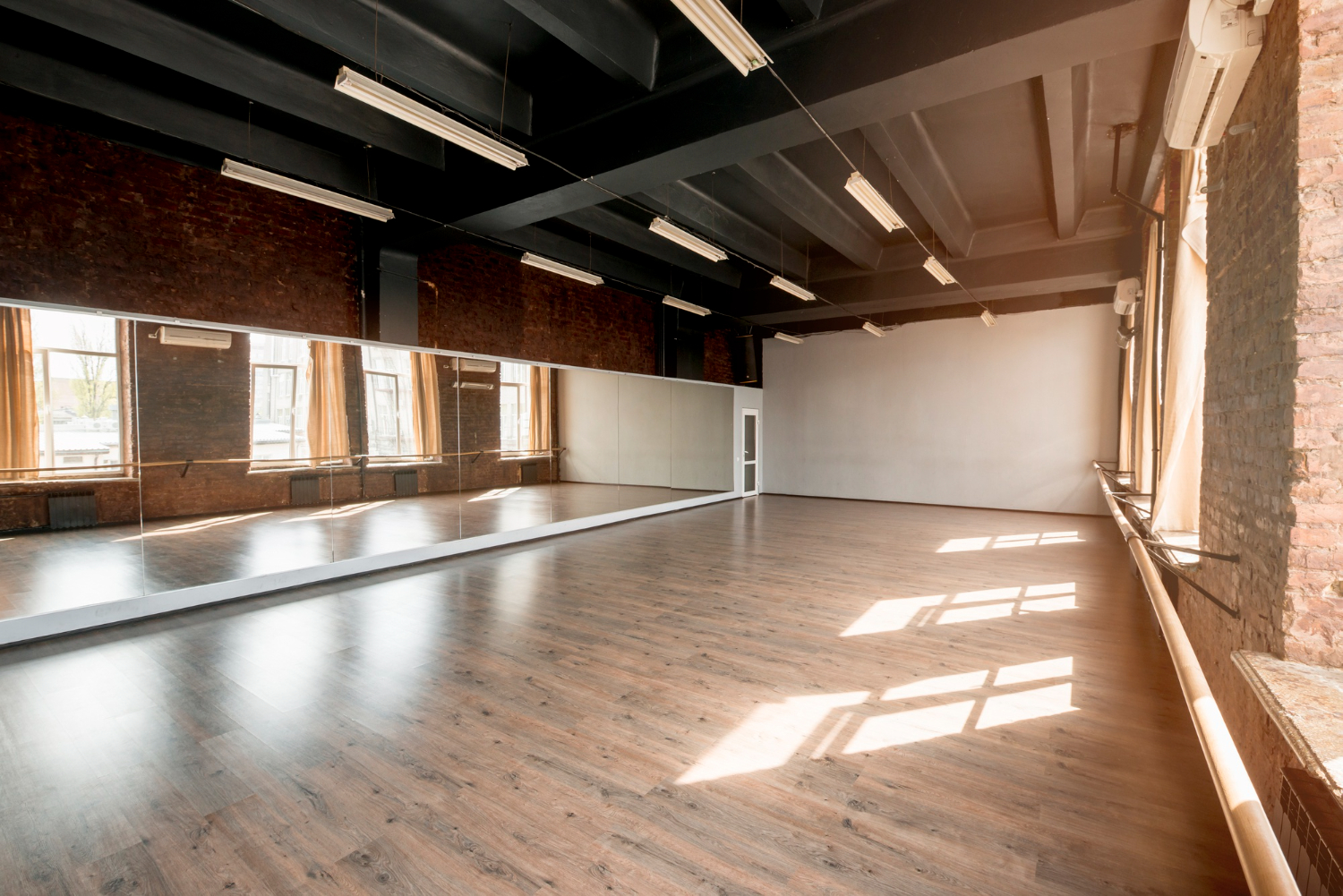
Deciding to learn how to dance with your partner is an exciting moment. You have probably had it building for a while — a wedding you attended where one couple looked effortless on the floor, a salsa video that played on your feed and made the whole thing look thrillingly possible, or simply a shared desire to do something more interesting on a Friday night than scroll separately on opposite ends of the sofa.
So you do the obvious thing. You search for a couple dance studio near you.
What most people discover at that point is a problem nobody warned them about — one that has quietly killed the dance ambitions of thousands of couples before they even made it to their second lesson.
The Style Trap That Most Local Studios Never Mention
Here is the catch: every physical dance studio has a speciality. The instructors were trained in specific styles, the curriculum is built around those styles, and the studio's competitive reputation depends on producing students who excel at them. That is perfectly reasonable from a business perspective.
The problem is that what the studio down the street happens to specialise in almost never aligns with what you and your partner actually want to learn.
You watched a video and decided you want to learn salsa — something with energy, hip movement, and a rhythm that makes you want to move even when the music is not playing. You show up for your introductory dancing lesson for couples, and within ten minutes it becomes clear this studio is primarily a competitive ballroom school. Everything is structured, formal, and geared toward performance. You spend your first hour learning hold positions for the foxtrot.
Or the reverse: you wanted elegant ballroom, and the local studio is a Latin specialist whose idea of beginner couple dance lessons is an upbeat salsa class where you feel immediately out of place.
Either way, you are now paying to learn something you did not choose — in a style you are not motivated by — with an instructor whose expertise is not in what you actually want. Most couples quietly give up within a few weeks and conclude that dancing is just "not for them." The real issue was never their ability. It was the mismatch between what they wanted and what they were sold.
Why This Mismatch Is So Common
Dance studios are businesses with fixed overheads, fixed instructor rosters, and fixed monthly curricula. Group dancing lessons for couples follow a calendar — month one is waltz, month two is cha cha, month three is foxtrot — regardless of what any individual couple actually wants to work on.
If you sign up in the wrong month, you are learning the wrong style. If you want to accelerate past the group's pace, you either pay significantly more for private lessons or you wait. If you want to practise a specific move you saw online, there is no mechanism for that in a group class structure.
The studio model was designed for a time when your only alternative was to figure it out entirely on your own. That trade-off — learn what we teach, or learn nothing — made sense then. It makes considerably less sense now.
What Different Dance Styles Actually Feel Like as a Couple
Before you commit to any couple dance studio or class, it is worth understanding what each major style actually demands — physically, musically, and in terms of partner connection. Most beginners pick a style based on a thirty-second video clip without knowing what they are signing up for.
Salsa Salsa is built on an eight-beat cycle with a strong emphasis on hip movement and rhythmic improvisation. It feels playful and flirtatious, and the lead-follow dynamic is clear from the very first basic step. The social scene around salsa is one of the most active of any partner dance — if you eventually want to dance with strangers at events, salsa gives you the most opportunities. The catch: the hip action and footwork timing take deliberate practice to feel natural, especially if you have a classical or ballet background where hips are traditionally kept still.
Ballroom (Waltz, Foxtrot, Quickstep) Ballroom dancing for couples has an elegance and formality that no other style matches. The slow waltz in particular — three beats, rise and fall, a sweeping quality to the movement — is genuinely one of the most beautiful things a couple can do on a dance floor when it is done well. The trade-off is that it takes longer to feel natural than salsa, and the technique is unforgiving: frame, posture, and footwork all need to work together simultaneously before it starts to flow.
Latin (Cha Cha, Rumba, Samba) Latin styles sit between salsa and ballroom — more structured than pure social salsa, but more sensual and rhythmically interesting than the ballroom styles. The cha cha is the most accessible entry point: the footwork pattern is distinctive and memorable, the music is consistently easy to find, and the basic step can feel rewarding within a single practice session. The rumba is slower and more intimate. The samba is energetic and physically demanding.
Swing (Lindy Hop, East Coast Swing, West Coast Swing) Swing dancing is the most improvisational of the major partner dance styles. It rewards musical playfulness and the ability to listen to each other physically, which makes it uniquely good for couples who value spontaneity over structure. The social scenes around swing — particularly Lindy Hop — are warm, welcoming communities. West Coast Swing in particular has a huge competitive and social circuit if you eventually want to take it further.
Social Dance If you are not attached to a specific style and primarily want to be able to dance comfortably at weddings, parties, and events — to feel confident rather than frozen when the music starts — a general social dance foundation is the most practical starting point. You learn to move together to a beat, to lead and follow, and to manage basic turns and transitions across a range of tempos. It is not one style; it is the connective tissue that makes all styles accessible.
How to Identify the Right Style Before You Commit to Lessons
The single most common mistake couples make is signing up for dancing lessons before they have any idea which style actually excites them. Here is a simple process that takes less than an hour and will save you weeks of the wrong lessons.
Watch full social dance videos, not performance clips. Performance videos from competitions are edited highlights. Find footage of couples dancing socially — at parties, in clubs, at dance events — and watch how it actually feels at a casual level. That is the realistic version of what you are signing up for.
Try moving to the music, not the steps. Put on a salsa track. Put on a waltz. Put on a swing track. Move however feels instinctive. The style that makes you both want to keep going, even without knowing any steps, is almost always the right starting point.
Record your first attempt at the basic step. Before you book a class or an instructor, find the foundational step for your chosen style online, try it in your living room for fifteen minutes, and record the attempt. Watch the footage back. If you are both laughing and want to keep going, that is a strong signal. If you both feel frustrated and disconnected, consider whether the style is the right fit before you commit money to it.
Once you have that recording, upload it to DanceBetter — even at this early stage, the AI can identify whether your frame, timing, and weight distribution are heading in the right direction, and give you something specific to work on before your first formal lesson.
Learning the Style You Actually Want, Not the Style Your Postcode Offers
The fundamental shift that technology has enabled is this: you no longer have to learn whatever the closest couple dance studio happens to specialise in.
You can choose salsa because you want salsa, not because the Tuesday evening class at the nearby studio happens to be salsa this month. You can choose swing because a documentary about Harlem in the 1940s made you fall completely in love with it. You can choose ballroom because you are preparing a wedding dance and the slow waltz is the only style that feels right for the song you have chosen.
The style you are genuinely motivated by is the style you will actually practise. And regular, motivated practice — even fifteen minutes a few times a week in your living room — consistently outperforms reluctant attendance at the wrong class.
Frequently Asked Questions About Finding the Right Couple Dance Style
How do we know which dance style is right for us as a couple? Start with the music, not the steps. The style whose music makes both of you instinctively want to move is almost always the right starting point. If you are genuinely indifferent to the music, the motivation to practise will be hard to sustain. Spend ten minutes listening to salsa, then a waltz, then a swing track, and notice which one pulls you both in.
What if we want to learn a style our local studio does not offer? This is exactly the situation online learning with AI feedback was built for. You can find tutorial content for virtually any partner dance style online, and AI-powered feedback tools can give you the technical correction that used to require an in-person instructor. Your zip code no longer determines your dance style.
Is it better to learn one style well or try several at once? One style at a time, always. Partner dancing relies on muscle memory and physical instincts — the lead-follow communication between two people needs to become automatic before it feels good. Switching between multiple styles before any of them are solid fragments your progress in all of them. Pick one, practise until the basic step and one turn feel natural, then expand.
Do both partners need to enjoy the same style equally? Not equally — but both need to be willing. The partner who is less enthusiastic will be the one who resists practice and slows the progress of both. If you genuinely cannot agree, cha cha and social dance are the styles most couples find accessible regardless of their individual musical tastes, which makes them good neutral starting points.
Can we switch styles once we have started learning? Yes, and there is no wasted effort — the core skills of partner dancing transfer across styles. Your frame, your lead-follow sensitivity, your musical timing, and your spatial awareness all carry over. Switching from waltz to salsa will feel jarring at first because the rhythmic framework is completely different, but you will progress through the salsa basics faster than a complete beginner would.
What is the fastest couple dance style to learn for a complete beginner? For most couples, salsa or East Coast Swing gives the quickest sense of actually dancing together — the basic steps are simple enough to grasp in a single session, and the music makes it feel energetic and rewarding almost immediately. Slow waltz is also very learnable quickly if you want something more formal, because the tempo gives you plenty of time to think between steps.
Do not let geography decide what you dance. Pick the style that genuinely excites both of you, find a clear space at home, and let the AI tell you what to work on.
Upload your first practice video here →
Already dancing at home and wondering whether a studio might add value? Read our full guide on online couple dance lessons vs. studio classes →