

AI Dance Coach vs Private Lessons: An Honest Comparison
Published on May 2026
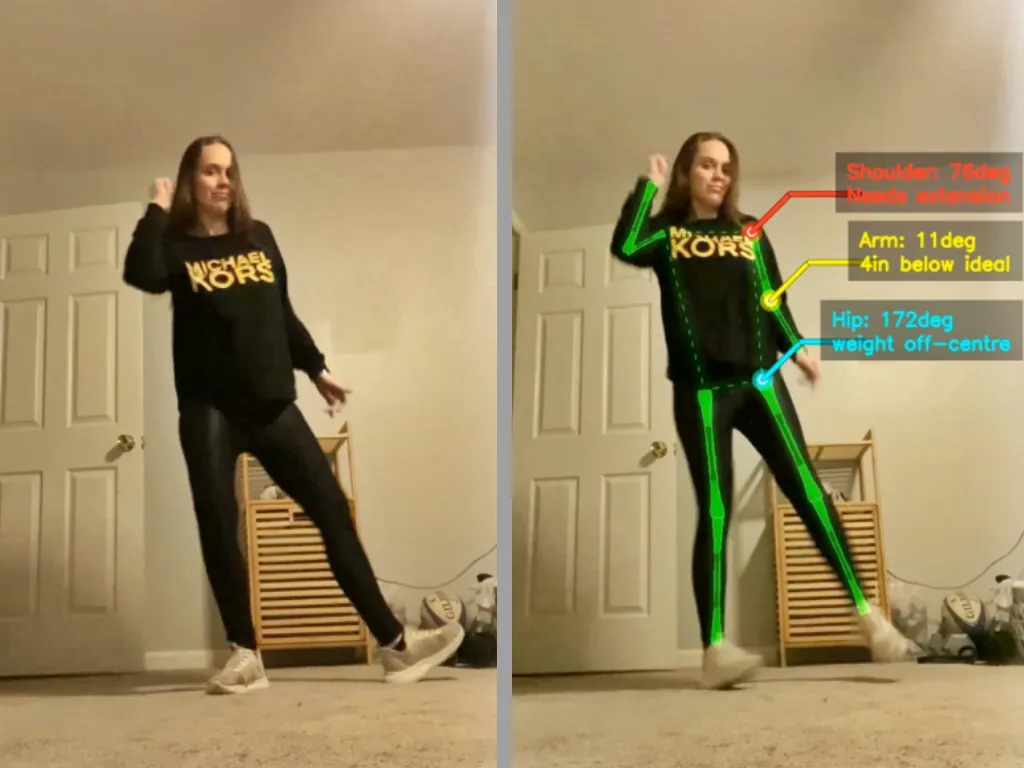
Private dance lessons cost between $80 and $150 an hour depending on the instructor and your location. Most people can afford one or two per month — which means most of their actual practice happens alone, without any feedback at all. That gap between lessons is where technique either compounds or deteriorates, and it has always been the weakest link in how people learn to dance.
DanceBetter was built specifically to close that gap. Upload a practice video and receive a detailed breakdown of your technique across every part of your body — head, arms, posture, footwork — plus a personalised practice schedule telling you exactly what to work on before your next session. Available whenever you have fifteen minutes and a phone.
This article is an honest comparison of both options. Not a sales pitch for either. If a private instructor is the right tool for your situation, we will tell you that too.
What a Private Instructor Does That AI Cannot
Let us start here, because the honest answer matters.
Physical correction in real time. A skilled instructor can feel whether your frame has collapsed by placing a hand on your shoulder blade. They can physically adjust your arm position to show you what correct feels like from the inside — a proprioceptive experience that watching a video of yourself cannot replicate. For styles where the sensation of the movement matters as much as its appearance, particularly partner dancing and ballet, this is genuinely irreplaceable.
Reading your energy and adapting on the spot. A good instructor notices when you are fatigued, frustrated, or holding tension somewhere unusual and adjusts the session accordingly. AI does not read emotional state — it reads footage.
Community and accountability. Showing up to a lesson creates a commitment structure that solo home practice simply does not have. For many people, the social relationship with an instructor is a significant part of what keeps them progressing over months rather than weeks.
Tacit knowledge that is hard to articulate. Experienced instructors carry decades of teaching intuition — they can tell in thirty seconds where a dancer's biggest bottleneck is, in ways that go beyond what can be captured in a technique checklist. The best instructors give you corrections you did not know you needed.
If you have access to an excellent instructor in your style, regular lessons are worth the investment — particularly in the early stages of learning when physical habits are being formed for the first time.
What AI Coaching Does That Private Lessons Cannot
Feedback after every single practice session. A private instructor sees you once or twice a week if you are committed and can afford it. The AI sees every clip you upload — which means your Tuesday evening solo practice gets the same quality of specific feedback as your Saturday lesson. The feedback loop closes every time you practise, not just on lesson days.
Frame-by-frame precision. A human instructor watching you dance in real time has a fraction of a second to process each movement and form a correction. AI analysis works through your footage at frame level — catching the specific count where your weight transfer stalls, the exact frame where your arm angle drops below the reference, the moment your chin breaks its focus. This level of precision is not achievable in a live setting regardless of how experienced the instructor is.
[Screenshot: DanceBetter split-screen showing frame-by-frame comparison between dancer's footage and a reference, with the exact divergence point highlighted]
Objective consistency. Instructors have preferences, moods, and biases. The same movement might receive different feedback depending on which instructor you are working with or what they noticed in that particular session. AI applies the same analytical criteria to every upload — your third clip gets the same quality of analysis as your first.
No performance anxiety. A meaningful number of dancers practise better alone than in front of a teacher. The absence of a watching eye removes a layer of self-consciousness that can actually interfere with learning, particularly in the early stages of picking up a new skill. Uploading a video to an AI involves none of the social stakes of being corrected in a lesson.
Cost and availability. At $80–$150 per session, weekly private lessons cost $320–$600 a month. DanceBetter costs a fraction of that with no scheduling constraints, no commute, and no minimum commitment.
[Screenshot: DanceBetter feedback report showing detailed corrections across head, arms, body, and footwork sections]
The Body Part Breakdown — What the AI Actually Sees
When you upload a clip to DanceBetter, the analysis covers your full body simultaneously — the kind of multi-point feedback that would take a human instructor several passes through the same footage to produce.
Head and eye focus — whether your gaze is dropping to the floor, whether your chin position is affecting your overall posture, and whether your head is leading your movement or trailing behind it.
Arm lines and hands — whether your extensions are reaching their full potential, whether your elbows are locking at the wrong moments, and whether your hand placement is completing or cutting your lines.
Posture and core alignment — whether your shoulders are creeping up under effort, whether your lower back is compensating for insufficient core engagement, and whether your chest position is limiting your range of movement.
Footwork and weight transfer — whether your steps are landing with full weight commitment or staying cautiously distributed between feet, and whether your timing is sitting on the beat or fractionally behind it.
A private instructor working with you for an hour will likely focus on one or two of these areas per session. The AI covers all of them simultaneously, every time.
[Screenshot: DanceBetter technique report showing all four body-area scores with specific correction notes under each — e.g. "Arm lines: elbow dropping on count 3 of the phrase. Focus on maintaining a soft but active elbow through the full extension."]
The Practice Schedule — What Comes After the Feedback
The analysis produces a prioritised practice schedule based specifically on what the AI found in your footage. Not a generic warm-up template — a specific plan telling you which elements to work on, in what order, and for how long, so that your next practice session is spent on the things that will produce the most improvement.
This is one of the areas where AI coaching has a structural advantage over private lessons: a lesson gives you corrections in the moment, but most dancers leave without a clear plan for what to practise in the days before the next one. The practice schedule fills that gap.
[Screenshot: DanceBetter practice schedule showing a week of targeted daily tasks — e.g. "Wednesday: 10 mins on weight transfer timing. Film from the side. Look for full commitment before initiating the next step."]
Which One Is Right for You
Private lessons are the better choice if:
- You are learning a partner dance and need physical lead-follow correction
- You are completely new to a style and need the physical guidance of correct technique being demonstrated and placed in your body
- You thrive on social accountability and the relationship structure of regular lessons
- You are preparing for a high-level competition and need expert eyes in the room
AI coaching is the better choice if:
- You are already taking lessons and want to make your between-session practice actually productive
- Your schedule or budget does not allow for regular private sessions
- You want specific, repeatable feedback on your technique without the cost and logistics of in-person lessons
- You practise better without an audience and want to build confidence before performing for a teacher
Both together is the most effective approach. Use private lessons for the things they genuinely do better — physical correction, tacit knowledge, accountability. Use AI coaching for between-session practice, so the feedback loop closes after every session rather than once a week. The two tools address different parts of the learning process and work better in combination than either does alone.
Frequently Asked Questions
Can AI coaching replace a teacher entirely? For recreational dancers and home learners, yes — for most of what they actually need. For competitive dancers, pre-professional training, and styles where physical partner connection is central, no. The honest answer depends on what you are trying to achieve.
What if I have never taken a lesson? Can I start with AI coaching? Yes. DanceBetter does not assume prior training — it analyses what it sees in your footage and gives you feedback calibrated to your current level. Many dancers who have never taken a formal lesson use it to build a foundation before their first class, which significantly accelerates their early progress.
How does AI feedback compare to feedback from a mirror? A mirror shows you a real-time, reversed image while you are simultaneously trying to execute the movement — which means your attention is split between performing and observing. Video footage lets you watch after the fact, with full attention on what you are seeing. AI analysis goes further — it identifies specific technical details in your footage that most dancers miss even when watching their own video carefully.
Is AI coaching useful for advanced dancers or just beginners? Useful at every level. Advanced dancers often get the most value from it because the corrections at that level are increasingly subtle — the kind of precise, consistent feedback that frame-by-frame analysis catches more reliably than a human instructor watching in real time.
Want to see what AI coaching actually looks like on your own footage? Upload a practice clip to DanceBetter →
Preparing for a competition? Read our full competition preparation guide →
Looking for an honest look at dance studio costs? Read about the hidden catches of couple dance studios →